Portraits from the shifting edge of identity.
Abstracts - Emotion reduced to its elemental geometry.
My artworks are offered in limited editions of 5.
All artworks are printed on archival canvas and are mounted on a Float Frame.
Ready to Hang
Free Shipping
Click Image


Ken Crost's Art Blog
My art blog explores the evolving intersection of creativity and technology, with a focus on digital and AI-assisted image-making. I share insights from my own practice, reflections on the changing art landscape, and thoughts on how new tools shape the way artists work and audiences respond. This space is a record of experimentation, discovery, and the ongoing search for meaning in a rapidly shifting visual world.
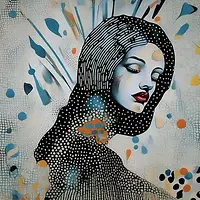

Decoding Symbolism in Portrait Artwork - 01.19.2026
In this post, I share how I interpret symbolism in portrait artwork — the way color, gesture, objects, and space quietly shape meaning. It’s a straightforward look at how portraits speak beneath the surface and how artists use visual cues to express identity and intention.

The Silent Persistence of Art - 12.07.25
“The Silent Persistence of Art” traces the lineage of movements once dismissed—Impressionism, abstraction, photography, digital art—and shows how they endured without rebuttal, letting the work itself reshape history. This meditation situates AI art within that continuum, reminding us that legitimacy is not won through argument but through persistence, creation, and the quiet mystery that remains when the noise fades.

What Is Art? - 10/30/2025
Art resists easy definition. It slips between categories, unsettles our expectations, and insists on being felt as much as understood. For some, it is beauty; for others, disruption. For me, it begins with a simple conviction: almost anything can be art, and what we call “good” is never fixed but always subjective. This post is an opening meditation—an invitation to consider not only what art is, but what it does to us in body, mind, and spirit.


The Beauty of the Unknown - 10/01/2025 - Updated 04.10.26
In a world chasing perfection and polish, I turn toward the beauty of the unknown. Abstraction opens a space where emotion can breathe without instruction, where ambiguity becomes possibility. Each work is less about control than about discovery—a reminder that art, like life, is richest when it resists certainty. These shifting forms don’t mirror fracture; they mirror resilience, imagination, and the endless ways we find meaning together.